Posts by Collection

aboutme

portfolio

publications

Whole-lake coarse woody habitat addition facilitates ecosystem regime restructuring in an oligotrophic lake

Preul-Stimetz, T. N., Shaw, S. L., & Sass, G. G. (2024). Whole-lake coarse woody habitat addition facilitates ecosystem regime restructuring in an oligotrophic lake. Lake and Reservoir Management.

The loss of vital littoral zone and riparian habitat due to lakeshore residential development is a pervasive issue across temperate aquatic ecosystems. Oligotrophic glacial lakes may be particularly vulnerable to reductions in coarse woody habitat (CWH) due to their lack of alternative structural habitat. Although influences of CWH on fish populations have been well documented, questions remain regarding CWH influences on lower trophic levels and water quality. We conducted a whole-lake CWH addition experiment within a BACI framework using 2 lakes, Sanford (treatment) and Escanaba (reference), in the Northern Highland Lake District of Wisconsin. Premanipulation monitoring began in 2015, trees were dropped in 2018, and data collection continued until 2023. We monitored limnological, planktonic, and benthic macroinvertebrate parameters to test whether CWH addition initiated trophic shifts and altered the structure of the aquatic food web. We found that CWH addition minimally affected water quality and changed some characteristics of Sanford Lake at lower trophic levels. Chlorophyll a concentrations in Sanford Lake significantly increased but Secchi depth was unaffected. The abundance of macrophytes increased in both systems; that in Sanford Lake increased more and was linked to the CWH addition. Dissolved oxygen significantly increased at multiple depth strata. Water temperature was unaffected. We observed declines in total zooplankton that were not related to CWH addition, but the decline in relative abundance of large grazers was. Our results provide a mechanistic understanding of the effects of habitat enhancement at an ecosystem scale and can help guide stakeholder and manager expectations following CWH addition.
Evaluating the potential importance of individual identity, maternal traits, and environment as predictors of egg characteristics in walleye Sander vitreus

Preul-Stimetz, T. N., Shaw, S. L., Feiner, Z. S., & Sass, G. G. (2024). Evaluating the potential importance of individual identity, maternal traits, and environment as predictors of egg characteristics in walleye Sander vitreus. Fisheries Research, 278.

Individual and environmental factors may influence gamete characteristics and contributions to recruitment in fishes. We tested for the influence of maternal, abiotic, and biotic factors on egg diameter and quality (i.e., oil droplet diameter) for walleye Sander vitreus in Escanaba Lake, Wisconsin, during 2018–2023 (omitting 2020). Analyses were conducted on fish captured once and for the same individuals captured multiple times during our study period. In the single-capture analysis, increasing maternal length was weakly related to larger egg diameter and oil droplet size. Increased yellow perch abundance was somewhat related to increased intra-clutch variation, whereas a later ice-off date was related to reduced intra-clutch variation. Fish that spawned later had more variable egg and oil droplet diameters. Among fish that were sampled over multiple years, individual identity was a strong predictor of egg and oil diameter. Our results suggest that regulations that preserve among individual variation in egg traits could increase the chances that environmental conditions will be favorable for spawning and recruitment for at least some fish.

Preservation in formalin variably affects egg size parameters of Walleye

Preul-Stimetz, T. N., Smith, C. D., Shaw, S. L., Feiner, Z. S., Sass, G. G., & Reed, J. R. (2025). Preservation in formalin variably affects egg size parameters of Walleye. Journal of Wildlife Management.

Fish egg studies provide insights into reproductive health, hatchery success, and population dynamics. Metrics for assessing egg quality, such as diameter, weight, and energetic content, are challenging to accurately measure because eggs degrade rapidly, and eggs are often preserved with formalin. Research is limited and has shown mixed results regarding effects of formalin preservation on egg diameter. No data exist on the influence of formalin preservation on oil droplet diameter. Egg and oil droplet diameters can be indicators of egg nutritional condition and subsequent larval survival and dynamics. We analyzed the diameter of Walleye Sander vitreus egg and oil droplets before and after formalin preservation from one Wisconsin and five Minnesota waterbodies in 2023. Preservation in 10% formalin altered egg and oil droplet diameters. The preservation effect differed depending on the initial egg or oil droplet diameter. Larger and smaller eggs decreased and increased in diameter following storage in formalin, respectively. Preserved eggs were more challenging to measure than fresh eggs due to changes in morphology, burst oil droplets, and increased opacity. Even though the preservation effects were small (5–12%), we recommend that studies involving precise egg measurements avoid formalin storage. The error introduced by formalin preservation was sufficient to prevent detection of small changes, particularly in the oil droplet.

Influence of the cessation of harvest on a formerly exploited Walleye population

Preul-Stimetz, T. N., Shaw, S. L., Renik, K. M., & Sass, G. G. (2026). Influence of the cessation of harvest on a formerly exploited Walleye population. Transactions of the American Fisheries Society.

Abstract Objective The decline of native Walleye Sander vitreus populations in inland lakes raises concerns about ­conservation and continued exploitation in these fisheries. Although Walleye have been intensively studied, available data on the long-term trajectories of exploited populations are limited. We tested for trends in the dynamics of an exploited Walleye population in Escanaba Lake, Wisconsin, following the implementation of a harvest-eliminating regulation in 2003. Methods We used long-term fisheries-dependent and -independent surveys of the Walleye population of Escanaba Lake during 1982–2022 to test for regulation effects. We compared sex-specific mortality and growth before and after the no-harvest regulation was enacted. We also performed breakpoint analyses on annual estimates of density and age-0 relative abundance and Walleye-specific angler effort, angler catch per unit effort, and distance traveled by Walleye anglers. Results Total mortality declined and there was a lower growth potential (von Bertalanffy ⁠) for both sexes following the elimination of harvest. A rapid increase in density occurred during an initial recovery phase (2004–2008), which was followed by a decade of variability (2009–2022) that appeared to stabilize toward the end of the data set. The recruitment dynamics were decoupled from adult population responses, and no trends over time were detected with the breakpoint analysis. Walleye-specific effort declined following the elimination of harvest, yet catch rates remained dynamic and were not related to the regulation change. Conclusions Our findings emphasize the importance of density-dependent processes and interannual variability when evaluating responses to regulations. Walleye populations may be capable of recovery when they maintain their productive capacity despite high harvest. We found that Walleye catch rates and age-0 recruitment may not be the best indicators of adult Walleye population dynamics. Implementing management strategies to ensure the resilience of Walleye populations under changing ecological and anthropogenic stressors will be critical to their long-term persistence.

Status and trends of black bass fisheries in Wisconsin: Regulation (in) effectiveness?

Sass, G. G., Shaw, S. L., Preul Stimetz, T. N., Smith, Q. C., Oele, D., Roberts, C. M., & Toshner, S. (2026). Status and trends of black bass fisheries in Wisconsin: Regulation (in) effectiveness? North American Journal of Fisheries Management.

ABSTRACT Objective Fisheries-dependent and fisheries-independent information is critical for assessing the status and trends of fish populations and regulations. We tested for changes in common fisheries-dependent and fisheries-independent metrics for Largemouth Bass Micropterus nigricans (LMB) and Smallmouth Bass M. dolomieu (SMB) in Wisconsin during 1990–2024. We also tested for responses associated with liberalized harvest regulations compared with a more conservative bass regulation. Methods We used creel survey data collected during 1990–2024 to test for trends in fisheries-dependent metrics. We used electrofishing data to test for trends in fisheries-independent metrics. Electrofishing data were also used to test for differences in relative abundance and proportional size distribution in a subset of bass populations with liberalized harvest regulations versus a more conservative black bass regulation. Results Directed angler effort for SMB significantly increased, whereas directed effort for LMB did not change. Catch rates for both species significantly increased. Harvest rates for LMB remained low, while SMB harvest rates significantly declined. Relative abundances for both species significantly increased. Population size structure increased for low to intermediate length-classes of LMB and intermediate to high length-classes of SMB. Density-dependent growth responses in mean length at age were evident in older age-classes for both species. Relative abundances of LMB populations with liberalized harvest regulations significantly declined, whereas SMB showed no change. Both species showed increased population size structure, but the increase was greater for LMB. Conclusions Our results suggest that bass populations are thriving in Wisconsin. However, density-dependent effects on growth may not be balancing diverse angler desires of catch and trophy potential or alleviating the negative correlation of LMB with Walleye Sander vitreus. Liberalized regulations on LMB showed promise for better balance in diverse bass fishing opportunity. Whether future angler behavioral responses (e.g., harvest rates) will be sufficient to balance fish communities that are managed for multiple species and ecosystem services is unclear.

Vulnerability to angling and survival of Smallmouth Bass in a northern Wisconsin lake

Shaw, S. L., Preul-Stimetz, T. N., & Sass, G. G. (2026). Vulnerability to angling and survival of Smallmouth Bass in a northern Wisconsin lake. North American Journal of Fisheries Management.

Abstract Objective Catch-and-release angling can influence survival of Smallmouth Bass Micropterus dolomieu, particularly in small inland lakes, when angler effort is high and fish are repeatedly captured. However, not all fish may be equally vulnerable to capture, which could apportion mortality effects unequally across the population. Our objectives were to (1) assess angler behavior, effort, and catch relative to abundance; (2) estimate survival and probability of capture in relation to fish sex and angler effort; and (3) evaluate vulnerability to capture and refractory periods following catch-and-release events. Methods We relied on standardized fisheries-independent surveys to estimate abundance, and we used compulsory creel data to characterize angler behavior and Smallmouth Bass catch rates in Pallette Lake, Wisconsin, during 2015–2025. Beginning in 2021, anglers were asked to record unique tag numbers of Smallmouth Bass that were caught and released. Captures from agency surveys and angler reporting were used to develop individual capture histories for fish and to estimate apparent annual survival and probability of capture. The probability of capture and the refractory period were evaluated in relation to fish characteristics (sex and year-class) and angler effort. Results Angler total catch divided by abundance suggested that all Smallmouth Bass could have been caught and released three to seven times in any given year during 2015–2025. Probability of capture for individual Smallmouth Bass increased as effort increased, and the probability was higher for males relative to females. Survival was 80% for males and 83% for females. During the tag reporting period, 42% of tagged Smallmouth Bass were never reported as caught by anglers, while 20% were reported once. The refractory period averaged 31 d and was not related to sex, year-class, or angling year. Conclusions Despite high estimated rates of catch and release per individual, the annual survival of Smallmouth Bass in Pallette Lake was relatively high compared with survival reported in other studies. Less than half of the population appeared highly vulnerable to angling, while a large segment of the population was less vulnerable, potentially due to a behavioral or spatial mismatch between bass and anglers. Differences in vulnerability to angling can influence the effects of fishing-related mortality on a population and are especially important to consider in high-effort, high-catch fisheries.

Coarse woody habitat addition minimally influences isotopic signatures of a north-temperate lake fish community

Stoll, W. T., Mrnak, J. T., Preul-Stimetz, T. N., Shaw, S. L., & Sass, G. G. (2026). Coarse woody habitat addition minimally influences isotopic signatures of a north-temperate lake fish community. Hydrobiologia.

Coarse woody habitat (CWH) is a structural element within lakes, and its presence/absence, abundance, and complexity have distinct influences in food webs. Stable isotopes, δ13C and δ15N, allow insight into trophic positioning, habitat use, and allochthonous contributions to fishes. Using a Before-After-Control-Impact design, we tested for isotopic shifts in the fish community after adding 140 trees to Sanford Lake, Wisconsin (treatment system) relative to an unmanipulated reference system. Our results indicated δ13C did not change after CWH addition, although weakly significant shifts were observed for yellow perch (Perca flavescens) and walleye (Sander vitreus). Isotopic shifts observed for P. flavescens and S. vitreus were due to changes in our reference system. δ15N signatures did not change after CWH addition. We hypothesize that ecological hysteresis driven by natural allochthonous-dominated inputs to the treatment system, slow isotopic turnover, and legacy δ13C may have masked any δ13C shifts. Since CWH addition did not introduce novel prey items or shift consumer-resource linkages, it was unlikely that δ15N would shift. Although our results suggested no major isotopic changes, our findings also suggest that more research is needed at lower trophic levels and over a longer period to understand fish community isotopic dynamics resulting from CWH manipulations.

Comparative Assessment of Calcified Structures for Age Estimation in Brook and Brown Trout

VanderBloemen, S., Mitro, M., Breaker, B., Hoffman, N., Preul-Stimetz, T., & Sass, G. G. (2026). Comparative Assessment of Calcified Structures for Age Estimation in Brook and Brown Trout. North American Journal of Fisheries Management.

Objective: Non-lethal age estimation is critical for low-density fish populations, threatened or endangered species, and populations with low abundances of mature fish. Past research has shown that non-lethal aging structures such as scales and fin rays have had mixed accuracy and precision for age estimation in trout. Our study tested the viability of using the maxilla as a non-lethal age estimation structure for Brook Trout Salvelinus fontinalis and Brown Trout Salmo trutta. Methods: We collected 282 Brook Trout and 129 Brown Trout from eleven streams in Wisconsin during autumn from 2020 to 2024. We collected sagittal otoliths and maxilla from each fish. Three readers estimated the age of each structure individually, and consensus age was determined if all three readers agreed upon the age of a fish. If a consensus age could not be agreed upon, that fish was removed from the consensus age part of the study. We compared age estimates between otoliths and maxilla for each species using age-bias plots. We assumed that otoliths would provide a more accurate and precise, albeit lethal, age estimation structure to compare with age estimates from non-lethal maxilla. Results: Maxilla-based age estimates for Brook Trout indicated that readers tended to overestimate age-0 fish and underestimate age-3 to age-5 fish. Maxilla and otolith-based age estimates were similar for fish age-1 and age-2. For Brown Trout, reader age estimates using maxilla were similar to age estimates obtained using otoliths for fish ages 0-5. Age estimates were similar for both structures for Brown Trout ages 6-9, although our sample sizes were small for older fish. Conclusion: Our findings indicate that the maxilla is a viable, non-lethal aging structure for Brown Trout. For Brook Trout, the uncertainties identified in maxilla-based age estimation likely negate the use of maxilla as an accurate non-lethal structure. Our observations corroborated other studies that have examined non-lethal age estimation methods in trout, suggesting that non-lethal calcified structures are reasonably accurate for age estimation in Brown Trout and more limited in Brook Trout. Lay Summary: Age estimates derived from maxilla were compared with those derived from otoliths for Brook Trout and Brown Trout. Our findings inform management decisions related to growth, harvest, and population health in trout populations, particularly when sacrificing fish for otolith age estimation is not feasible. Maxilla offer a non-lethal age estimation option useful for vulnerable populations of Brown Trout, and to a lesser extent, Brook Trout.

research

My Ethos We live in a diverse world facing a multitude of stressors. “Death by a thousand cuts” is a common paradigm, but it can be difficult to resolve managment concerns when we are lacking a whole-ecosystem perspective of mechanistic drivers of fish declines. Expanding the toolset available to managers to include habitat and forage angles can inform why traditional rehab metrics may be less successful.

Forage and Non-game Species

Forage and Non-game Species

The consideration of forage/non-game species and habitat is often neglected in fisheries management due to budget & time constraints. However, an understanding of ecosystem limitations is key to resolving potential fishery declines. Our current top-down (gamefish focused) paradigm is good for keeping tabs on popular sportfish but is limited in understanding mechanistic reasons for observed declines. We are currently studying the factors influencing Yellow Perch year class strength using the long term NHFRA dataset. We are also conducting novel surveys to investigate capture efficiency for forage fish and evaluate availability for Walleye through ontogeny.

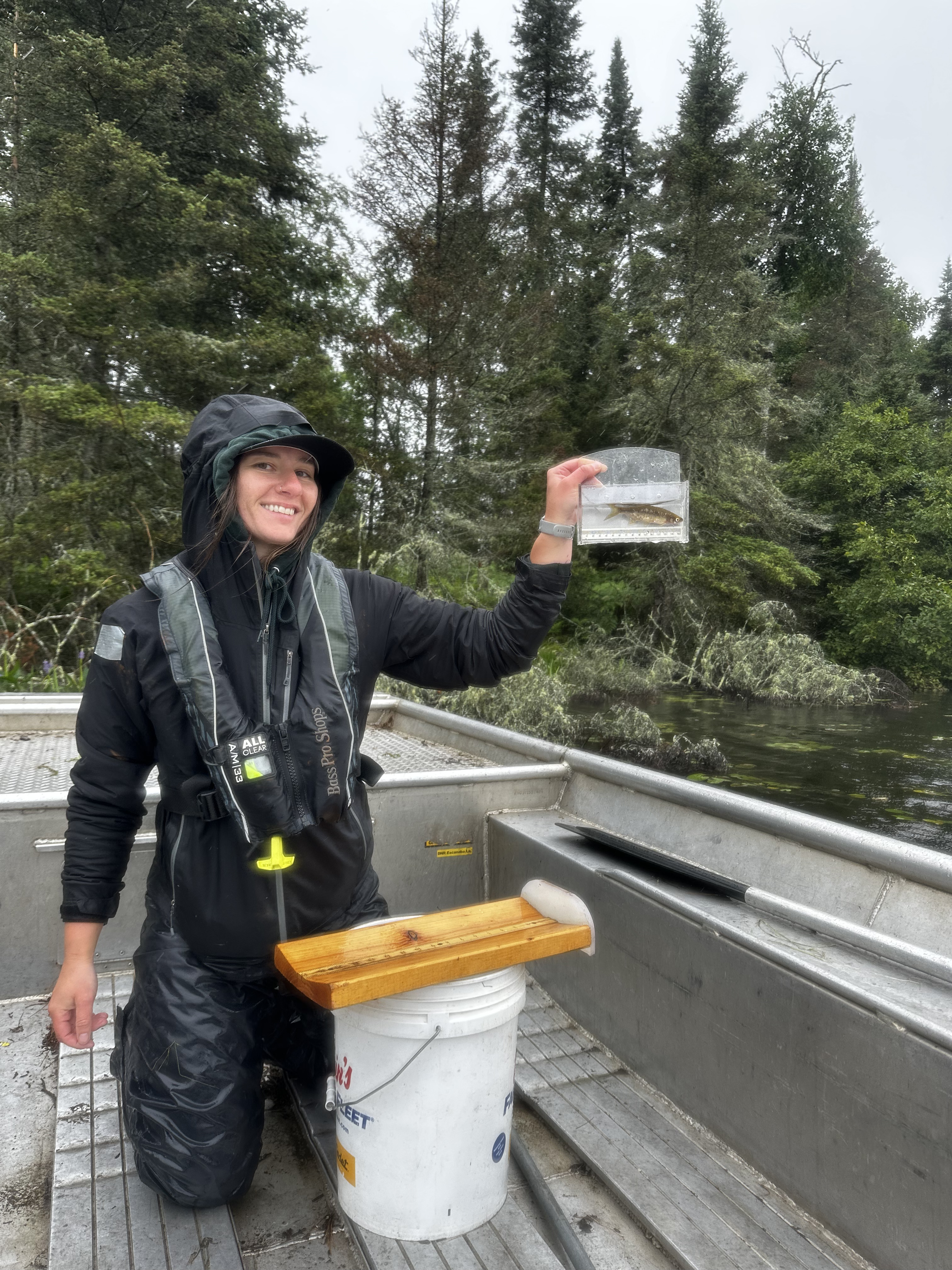
Golden shiner captured in a mini-fyke in Escanaba Lake, WI.

Interactions among fish and macrophyte communities

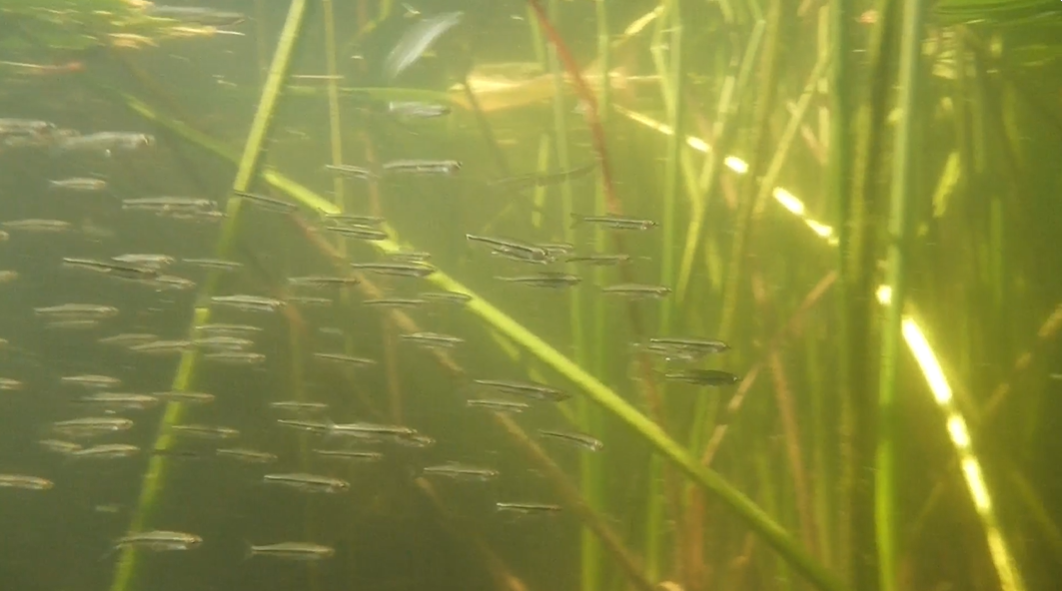
A school of shiners in a bed of aquatic macrophytes.

Interactions among fish and macrophyte communities

I am interested in understanding the interactions and feedback loops among fish communities and aquatic macrophyte communities. Specific fish species may have an affinity for one species of plant over another even within the same functional guild, and I am curious as to why. As climate change induces changes in our aquatic communities, it is important to understand the mechanisms underlying changes so we can attempt to predict trajectories of different systems.

Fish Community Rehabilitation

Fish Community Rehabilitation

Fish restoration work in Northern Wisconsin is largely focused on single-species efforts to restore declining populations of Walleye. Walleye are declining for a multitude of reasons, which continue to become more complex and difficult to resolve. We are researching novel walleye rehabilitation methods which incorporate multiple strategies and are underpinned with strong collaboration across tribal, state, and federal agencies.

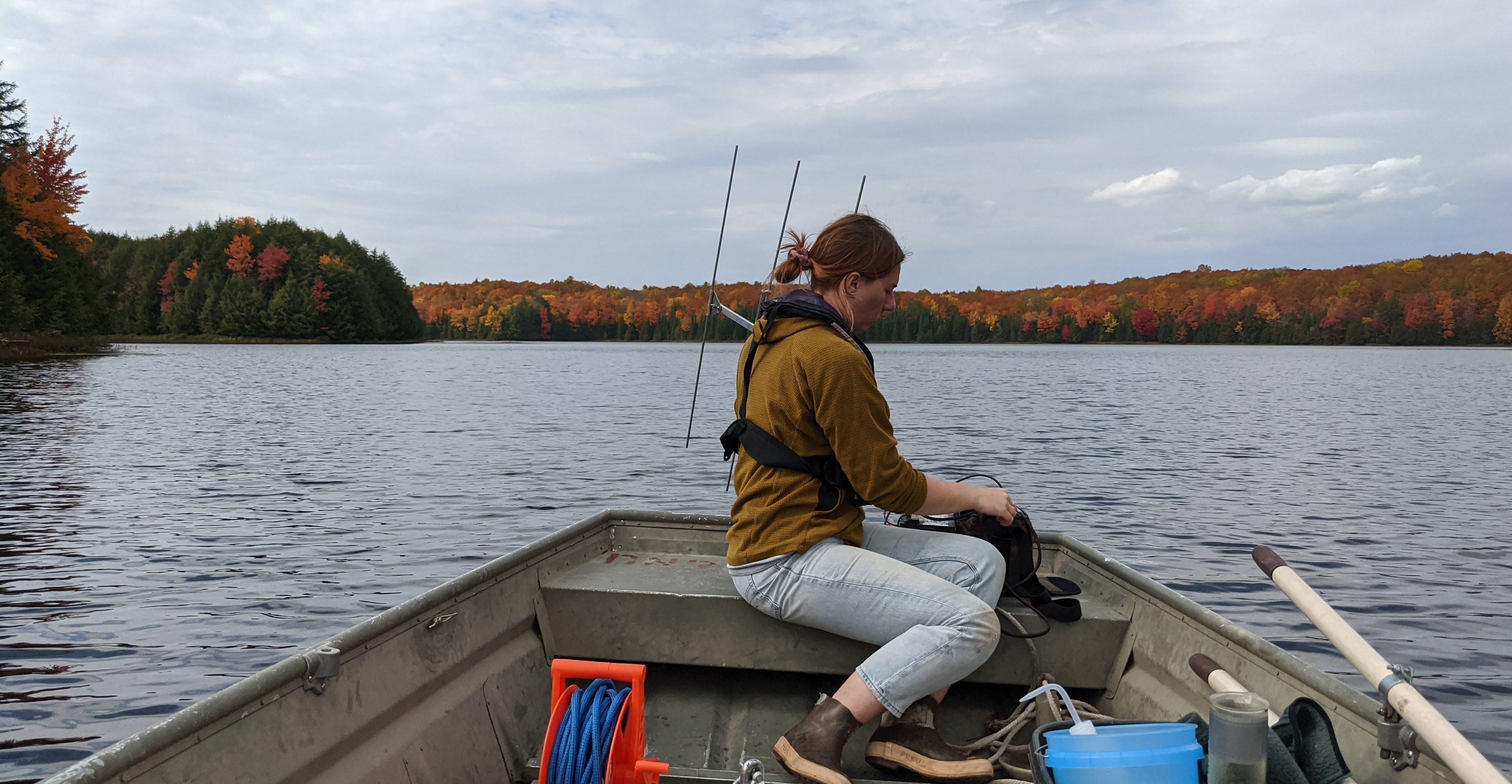
Radio telemetry to monitor fish responses to habitat modification.

talks

teaching